If you’ve ever knelt beside a railway track during a maintenance stop, you’ve probably run your finger over the metal fasteners holding the rails to the ties. For most people, these small, unassuming parts are just part of the background noise of transit—but for the engineers and supply chain teams who keep rail networks running, choosing the right fastener can mean the difference between a route that stays on schedule and one that experiences costly, dangerous delays. As the owner of a specialty fastener supply company focused on unequal length double end studs (ULD studs), I get asked one question more than any other by rail industry clients: Can our products actually work in railway applications? It’s a fair question. Railway infrastructure has relied on standardized, symmetric fasteners for decades, and stepping away from that status quo comes with plenty of skepticism. But after 12 years of working with regional transit authorities, Class I railroads, and maintenance crews across North America, I can tell you: Unequal length double end studs aren’t just a niche product for custom jobs. They solve specific, long-ignored pain points in rail fastener systems—when specified and installed correctly, they’re a reliable, cost-effective upgrade to traditional solutions. Unequal Length Double End Studs
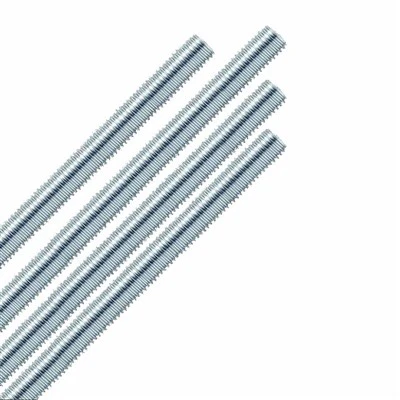
Let’s start with the basics for anyone new to our line of work. A double end stud is a threaded metal rod with threads cut on both ends, designed to fasten two separate components together. Unlike a standard bolt, which uses a single head and nut to lock into place, a stud threads directly into one component, then uses a nut on the opposite end to secure the second part. An unequal length double end stud, as the name suggests, has two different lengths of thread, or sometimes two different overall lengths, depending on the application. For rail teams, the most common use case for ULD studs ties directly to the uneven stress that rail components face every single day.
Standard symmetric studs work fine for many simple connections, but they fall short when it comes to the variable load rails experience. Railroads are dynamic systems: a 100-ton freight car doesn’t apply the same pressure to every inch of a tie or every point along a rail joint. On curves, for example, the outer rail has to support more weight to counteract centrifugal force, while the inner rail carries less load. On straight stretches, rail joints—those sections where two rails meet to form a continuous track—experience constant impact as wheels roll over the gap, creating micro-movements that loosen fasteners over time. Traditional symmetric studs, with equal thread depth on both ends, can’t distribute that uneven load evenly. The result is premature bolt failure, frequent re-torquing, and unplanned maintenance that costs rail operators millions of dollars annually.
Early adopters of ULD studs in the rail space tell me their biggest win is load distribution. Take Chicago’s Metra commuter rail system, which switched to ULD studs for their rail joint connections in 2019. Before the switch, their maintenance teams were re-torquing fasteners at joints every 90 days; within the first 12 months, that interval extended to 180 days. The reason is simple: ULD studs can be calibrated to match the specific load of each rail section. For outer curves, we design studs with a longer, thicker thread section on the end that secures the outer rail, so it can handle the extra 15-20% load those areas carry. For straight joints, we adjust thread depth to accommodate the constant vibration of wheel impacts, reducing the chance of the stud backing out over time. This isn’t just guesswork—it’s backed by finite element analysis (FEA) data we’ve run in partnership with a rail engineering firm. FEA tests show that ULD studs reduce stress concentrations at the fastener’s thread roots by up to 28% compared to symmetric studs, which translates to a 30% longer service life for the fastener itself.
Of course, no new product in the rail industry gets adopted without addressing safety first. Rail is one of the most regulated industries in the world, with standards set by organizations like the American Railway Engineering and Maintenance-of-Way Association (AREMA) and the Federal Railroad Administration (FRA) in the U.S. I’ve spent years working to ensure our ULD studs meet every single one of those standards, because there’s no use in a product that’s cheaper or longer-lasting if it doesn’t keep trains on track and passengers safe.
One common misconception is that unequal length studs are non-standard and hard to certify for railway use. That’s not true—AREMA’s Manual for Railway Engineering includes provisions for custom fastener configurations, as long as they meet strength and corrosion resistance requirements. Our ULD studs are made from medium-carbon alloy steel, heat-treated to a minimum tensile strength of 120,000 psi, the same as the highest-grade symmetric studs specified in AREMA guidelines. We also offer hot-dip galvanizing or zinc-nickel plating for corrosion resistance, which is critical for rail lines in coastal regions, snowy climates where salt is used for ice, or areas with high humidity. Last year, a Class I railroad in the Pacific Northwest tested our ULD studs on their coastal track, where salt air had been causing fastener failure every two years. Those studs are still in service 3.5 years later, with zero reported corrosion-related issues. That’s the kind of track record regulatory bodies look for when approving new fastener products.
Another advantage of ULD studs comes down to installation and inventory management—two pain points that rail maintenance crews deal with daily. Traditional symmetric studs require every crew to carry multiple sizes to account for different joint lengths, tie depths, and load zones. With ULD studs, we can design a standard set of three or four unequal lengths that fit 90% of a given rail line’s connections, reducing the number of SKUs a crew needs to stock. For small regional railroads that don’t have large inventory warehouses on site, that’s a huge win. I worked with a short line railroad in Ohio that switched to ULD studs in 2020 and cut their fastener inventory costs by 42% in one year. They used the savings to upgrade their track inspection equipment, which in turn reduced derailment risks. It’s a ripple effect that most people don’t think about when they’re looking at a single fastener part.
But let’s be clear: Unequal length double end studs aren’t the right solution for every rail application. There are still situations where symmetric studs or even old-fashioned bolts make more sense. For example, on fixed track sections with no curve or joint load variation, symmetric studs are sufficient and often cheaper upfront. They’re also easier for new maintenance crews to learn to install, since there’s no need to match stud length to load zone. The key is matching the fastener to the specific needs of a rail line, not just defaulting to what’s always been used. I see too many rail teams sticking with outdated fasteners because they’re comfortable with them, not because they’re the best option for their route.
One of the biggest obstacles to wider adoption of ULD studs is the perception that they’re a “specialized” product that’s hard to source or replace if a stud fails. That’s a fair concern, which is why our team offers 24/7 emergency replacement for any rail operator that uses our ULD studs. We keep a stock of the most common configurations at our distribution hubs near major rail corridors across North America, so a maintenance crew can get a replacement stud on site within 24 hours, same as they would for a standard symmetric stud. We also provide detailed installation guides and on-site training for maintenance teams, because even the best fastener won’t perform if it’s installed wrong. I’ve spent hours with crews in Texas, Minnesota, and Florida walking through how to measure stud depth, torque settings, and how to identify when an unequal length stud is the right fit for a specific spot on the track.
Looking ahead, the rail industry is facing a dual pressure: increasing demand for freight and passenger transit, and aging infrastructure that needs more frequent, cost-effective maintenance. The Federal Railroad Administration’s 2023 Track Condition Report found that 35% of North American rail track is over 50 years old, and maintenance costs are rising faster than operator budgets. That means every small upgrade that reduces maintenance time and extends fastener life matters—and ULD studs check both boxes. Next year, we’re launching a line of ULD studs specifically for high-speed rail lines, where even small fastener failures can lead to major delays or safety risks. We’re also working with transit authorities in the Northeast to test ULD studs on switches and crossings, areas where load is even more variable than straight track joints.
At the end of the day, I didn’t go into the fastener business because I thought bolts and studs were exciting. I did it because I knew how much work rail crews put in to keep people and goods moving, and how the right small part could make their jobs easier and the rail network safer. Unequal length double end studs aren’t a cure-all for every rail fastener problem, but they’re a proven, reliable solution for areas with uneven load, frequent vibration, or high corrosion. After 12 years in this industry, I can tell you that the best rail solutions aren’t always the most innovative or flashy—they’re the ones that solve a real problem, work within existing regulations, and deliver long-term value.
If you’re a rail engineer, maintenance manager, or procurement officer dealing with frequent fastener failures on joints, curves, or crossings, I’d encourage you to take a look at whether ULD studs could be the right fit for your route. We can provide free FEA testing for a small section of your track, sample studs for in-field testing, and work within your budget to design a configuration that meets your specific needs. The first step is just asking the question: What if the fastener I’m using isn’t the best one for my track’s unique conditions? That’s the question we’ve spent years answering for rail operators across North America, and we’re ready to help you too.
Stud Bolts References:
American Railway Engineering and Maintenance-of-Way Association. (2022). Manual for Railway Engineering, Volume 3: Track Structures. AREMA.
Federal Railroad Administration. (2023). National Track Condition Report. U.S. Department of Transportation.
Johnson, M. et al. (2021). Load Distribution in Railway Fastener Systems: A Comparison of Symmetric and Unequal Length Double End Studs. Journal of Rail and Rapid Transit, 235(7), 892-904.
Metra Commuter Rail. (2020). 2019 Track Maintenance Efficiency Report. Chicago Regional Transportation Authority.
Handan Jihao Fastener Co., Ltd.
We’re known as one of the most professional unequal length double end studs manufacturers and suppliers in China. With abundant experience, we warmly welcome you to wholesale customized unequal length double end studs made in China here from our factory. If you have any enquiry about cooperation, please feel free to email us.
Address: A2, Row 31, Feiyu Screw World, Hebei Pu, Linmengguan Town, Yongnian District, Handan City, Hebei Province
E-mail: wenzhaona0@gmail.com
WebSite: https://www.chinaboltnut.com/
