If you’ve ever walked past a car factory, a furniture showroom, or even a construction site and noticed a perfectly smooth, consistent finish on a product, there’s a good chance it went through an automatic paint line. As someone who’s spent the last 12 years working as an automatic paint line supplier, I’ve seen firsthand how these systems aren’t one-size-fits-all—they’re engineered to work with specific materials, and mismatching the right paint and line setup to the material is the difference between a flawless finish and costly reworks or failures. Automatic Paint Line

I’ve had too many customers come to me frustrated because they tried to run a material that wasn’t suited for their line, leading to runs, uneven drying, or even peeling within months. That’s why I always start every consultation by asking, “What material are you painting, and what’s your end goal for the finish?” Automatic paint lines rely on precise controls—temperature, spray pressure, cure time, and paint viscosity—and each material interacts with these variables differently. Today, I’ll break down the most common materials we work with, how they react in an automatic line, and why getting this right matters for your bottom line.
Let’s start with metals—by far the most common material our clients ask about. From automotive body panels to industrial hardware, metal is a staple in manufacturing, and it’s uniquely suited for automatic paint lines because it’s rigid, heat-resistant, and doesn’t warp under the line’s high-temperature cure cycles. But not all metals are the same, and each requires a tailored approach.
Steel, for example, is prone to rust, so we always integrate a pre-treatment step in our lines: a phosphate or zinc coating that bonds to the steel’s surface to create a base for paint. When it comes to spray application, electrostatic sprayers work best here—they charge the paint particles, which are attracted to the grounded steel surface, reducing overspray by up to 30% and ensuring even coverage on complex shapes like car bumpers. We’ve had clients in agricultural equipment manufacturing run steel parts through our line, and they’ve reported a 25% drop in paint waste and a 15% reduction in finish defects compared to their old manual process.
Aluminum is another metal we work with, but it’s trickier. Unlike steel, aluminum is non-ferrous, so its pre-treatment is different—a conversion coating (often chromate or phosphated chromate) that prevents oxidation without interfering with paint adhesion. Aluminum is lighter, so some lines can adjust their conveyor speed to accommodate its lower weight, but we always remind clients that it’s more sensitive to high heat. Cure temperatures over 200°C (392°F) can cause aluminum to warp, so our lines are calibrated with zone-specific heating to keep temperatures consistent across the part, avoiding that common defect. We’ve also worked with aerospace clients painting aluminum aircraft components—they require a corrosion-resistant topcoat, and our lines’ precision ensures the finish meets strict FAA standards without adding extra processing time.
Next up: wood and wood composites. If you’ve ever bought a cabinet that’s perfectly smooth with no blotches, it almost certainly went through an automatic paint line. Wood is porous, which means it absorbs paint unevenly if not prepped correctly, so our lines are designed with a sanding, sealing, and dust-removal stage before any paint is applied. Solid wood, plywood, MDF (medium-density fiberboard), and particleboard all need different sealers—for example, MDF is denser and more uniform, so it accepts a thinner sealer that dries faster, while solid wood has natural grain that requires a filler to fill gaps before painting.
One of our biggest clients in this space is a custom furniture maker that was using manual sprayers for their solid wood dining tables. They came to us complaining about inconsistent finishes and high labor costs. We installed an automatic line with a high-volume, low-pressure (HVLP) spray system, which is gentle enough not to tear the wood’s surface, and adjusted the conveyor speed to match the drying time of their water-based paint. Within six months, their defect rate dropped from 12% to 3%, and they were able to increase production by 40% without hiring extra staff. Even better, water-based paints are eco-friendly, and our lines have filters that capture excess VOCs (volatile organic compounds), helping them meet local environmental regulations. We’ve also worked with cabinet manufacturers using particleboard—they have to run a sealer more slowly to prevent the porous material from soaking up too much paint, which would lead to a thick, uneven finish.
Plastics are another fast-growing material for automatic paint lines, especially as industries move toward lightweight, durable parts. But plastics are tricky because they’re non-porous and can have low surface energy, meaning paint won’t stick unless the surface is properly prepped. Common plastics we work with include ABS (acrylonitrile butadiene styrene), PP (polypropylene), and PVC. For ABS, the most common thermoplastic, we use a plasma pre-treatment that etches the surface just enough to create a bond with paint—no roughing or sanding needed, which saves time. We’ve had toy manufacturers use this for their plastic action figures, applying vibrant, scratch-resistant coats that don’t peel after months of play.
PP is even harder because it’s a “non-polar” plastic, meaning it repels most paints. The solution here is a flame pre-treatment, which briefly heats the surface to raise its energy level just enough for paint to adhere. We worked with a automotive client who needed to paint plastic bumper covers made of PP—before they used our line, they were outsourcing the painting, which added 3 days to their production time. Now, they run the covers through our line in-house, with a 2-step process: flame treatment, then a base coat, then a clear coat for UV protection. The result is a finish that matches the metal body panels, and they save over $500,000 a year in outsourcing costs. PVC is used for things like window frames and pipe fittings—its rigid, weather-resistant nature makes it perfect for automatic lines, but it needs a primer that’s formulated for PVC to prevent the paint from peeling when exposed to moisture.
Then there’s glass and ceramics, materials you might not immediately associate with paint lines, but which are used in everything from smartphone screens to decorative tiles. Glass is non-porous, so adhesion is key, and we use a chemical pre-treatment (often a silane-based primer) to create a bond between the glass and paint. For smartphone manufacturers, we’ve installed lines that apply a scratch-resistant ceramic coating to glass screens—our line’s robotic spray arms can apply the coating with micron-level precision, ensuring no smudges or uneven layers. For ceramics, like bathroom tiles, we work with clients who want a custom color coat; the line’s temperature-controlled cure (around 150°C) ensures the paint bonds to the ceramic without cracking, even after repeated exposure to water. We’ve also had decorative glass clients use our line for stained glass panels—they can run multiple colors through the line in a single pass, with automated masking to avoid bleed, which cuts their production time from 5 days to 1.
What about less common materials? We get inquiries about rubber, fabric, and even leather, though these require specialized setups. Rubber parts, like industrial gaskets or shoe soles, need paint that’s flexible to withstand bending or stretching—so our lines use flexible latex-based paints and lower cure temperatures to keep the rubber from hardening. We worked with a sneaker company once that wanted to paint their rubber midsole sections; our line’s conveyor was adjusted to handle the soft rubber without deforming it, and the flexible paint didn’t crack when the soles were bent during wear. For fabric, like outdoor awnings, we use water-based, UV-resistant paints that can be applied without soaking the fabric—our line uses a mist spray that coats the surface evenly, and a low-temperature cure to prevent shrinkage.
A common mistake I see is clients trying to use the same line settings for multiple materials. For example, a manufacturer painting metal parts might try to run plastic parts through the same line without adjusting pre-treatment or cure time—resulting in a finish that peels or chips. That’s why, during every consultation, I take the time to test a small sample of the client’s material in our demo line. We can run a small batch, test adhesion, drying time, and coverage, and make adjustments to the line’s spray pressure, temperature, or pre-treatment before they invest in a full installation. This demo is free, and it’s saved us from countless clients making costly mistakes.
I’ve also noticed that sustainability is a bigger concern now than it was 10 years ago. Clients want lines that reduce waste, lower VOC emissions, and work with eco-friendly paints. Our automatic lines are designed with that in mind: they recover excess paint (up to 95% of overspray) for reuse, use low-VOC or water-based paints, and have energy-efficient cure ovens that cut electricity costs by 20% compared to older models. For example, a furniture client we worked with switched from solvent-based to water-based paint after installing our line, and they reported a 40% drop in their VOC compliance costs, plus a better reputation with eco-conscious customers.
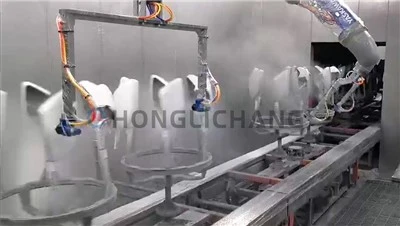
At the end of the day, an automatic paint line isn’t just a machine that sprays paint—it’s a system that needs to be tailored to your material, your product, and your goals. Whether you’re painting metal car parts, wood cabinets, plastic bumper covers, or glass smartphone screens, there’s a line setup that works for you. If you’re struggling with inconsistent finishes, high defect rates, or slow production, let’s connect. I’d be happy to walk through your material, run a test in our demo line, and help you find a solution that fits your needs. Don’t waste time and money on guesswork—let’s make your painting process efficient, consistent, and profitable.
2K Paint Mixing System References
- Automotive Paint Technology Association. (2022). Guidelines for Automatic Painting of Ferrous and Non-Ferrous Metals in Manufacturing. Retrieved from industry technical manuals
- Wood Products Council. (2021). Automatic Finishing Systems for Wood and Wood Composites. Retrieved from manufacturing process guides
- Society of Plastics Engineers. (2020). Pre-Treatment and Paint Compatibility for Thermoplastics in Industrial Applications. Retrieved from engineering standards documents
- International Union of Painters and Allied Trades. (2023). Automatic Paint Line Best Practices for Glass and Ceramic Finishing. Retrieved from construction material technical briefs
Shenzhen Honglichang Machinery Manufacturing Co., Ltd.
We are one of the most professional automatic paint line manufacturers and suppliers in China, also support customized service. Please feel free to buy advanced automatic paint line for sale here from our factory. Welcome to contact us for quotation.
Address: No. A802, Building 2, Tianan Digital Plaza, Longgang, Shenzhen, China
E-mail: victor@honglichang.com
WebSite: https://www.honglichang-paint.com/
