If you’ve ever stood next to a drilling rig during a deep-well operation, you’ve likely felt the low, rumbling vibration that travels through the pipe and into the ground. That vibration isn’t just a nuisance—it’s a costly problem. Over time, it can wear down drill bits, damage downhole tools, cause wellbore instability, and even lead to unplanned downtime that cuts into project timelines and budgets. For years, operators have tried to mitigate this vibration with a mix of heavy weight, specialized stabilizers, and adjusted drilling parameters, but one solution that’s gained increasing attention from both drilling engineers and my team here at our non-magnetic drill collars (NMDC) supplier is this: can NMDCs actually reduce vibration during drilling? Non-Magnetic Drill Collars

Let me start with some real-world context, because I don’t just work in this space—I’ve talked to dozens of operators who’ve tested both magnetic and non-magnetic collars, and I’ve seen the data firsthand. First, it’s important to clarify what makes non-magnetic drill collars different from their standard magnetic counterparts. Most drill collars are made of high-strength steel that’s magnetic, which works for standard drilling, but they’re non-conducive when it comes to one key function: housing Measurement While Drilling (MWD) or Logging While Drilling (LWD) tools. Those tools require a non-magnetic environment to send accurate, unobstructed data to the surface. That’s where NMDCs come in. For decades, operators have used them solely for that logging and telemetry purpose, never stopping to ask if their material properties could also help with vibration. That’s the question our team set out to answer a few years back, when we started noticing a pattern in customer feedback: the operators who were running NMDCs in long horizontals or high-angle wells were reporting fewer bit failures and less tool damage than those running standard magnetic collars in similar conditions.
To get to the bottom of that, we teamed up with a third-party drilling engineering firm to run a series of tests, both in a controlled lab setting and on three active well sites in the Permian Basin between 2021 and 2022. We tested three types of drilling assemblies: one with 100% magnetic steel collars, one with a hybrid assembly (standard magnetic collars in the upper drill string, NMDCs only in the MWD/LWD section), and one with full NMDC assembly for the bottom hole assembly (BHA). The sites were all 10,000 to 12,000 feet deep, with horizontal sections ranging from 4,000 to 6,000 feet—conditions prone to both torsional (twisting) and lateral (side-to-side) vibration, two of the most destructive types of drilling vibration.
Lab tests first confirmed a key material difference: non-magnetic drill collars, which are typically made of austenitic stainless steel or specialized high-nickel alloys, have a lower elastic modulus than standard magnetic drill collars. Elastic modulus is basically a measure of a material’s stiffness—lower stiffness means the material can flex or absorb energy rather than transferring it directly to the bit or downhole tools. Standard magnetic steel has an elastic modulus of around 200 GPa, while our NMDCs clock in at between 170 and 190 GPa, depending on the alloy. That might sound like a small difference, but when you’re dealing with forces that can reach thousands of foot-pounds in drilling, it adds up fast. Think of it like this: a stiff metal rod will snap if you twist it hard enough, but a slightly more flexible rod will bend just a little to absorb that twist before it breaks. That’s exactly what’s happening with NMDCs and torsional vibration, which is the cause of “stick-slip” events—when the drill bit stops spinning briefly, then jerks forward, twisting the entire assembly. Stick-slip can reduce bit life by up to 50% in some cases, according to the International Association of Drilling Contractors (IADC), and our lab tests found that NMDC assemblies reduced stick-slip incidents by 38% compared to full magnetic assemblies.
The field tests backed that up. On our first Permian site, a horizontal well targeting the Wolfcamp formation, the operator was running a full magnetic BHA and was seeing an average bit life of 82 hours, with two unplanned bit changes due to torsional damage. We swapped out the magnetic collars in the BHA’s lower section—where the most vibration occurs—for our NMDCs, keeping the upper magnetic collars to maintain weight for drilling. The result? Bit life jumped to 117 hours, no unplanned changes, and surface vibration readings (taken by accelerometers mounted on the drill rig’s top drive) dropped by 27% in torsional frequency. The second site, a deviated well in the Haynesville, had issues with lateral vibration—caused by the drill bit bouncing against the wellbore wall, leading to uneven wear on the bit and erratic MWD data. After switching to full NMDC BHA, the operator recorded a 32% reduction in lateral vibration, per downhole MWD data, and reduced wellbore tortuosity (a measure of how straight the wellbore is) by 19% compared to the offset well drilled with magnetic collars.
But here’s the thing: NMDCs don’t eliminate all vibration. No drilling assembly does. Vibration is a natural byproduct of the interaction between the drill bit, the formation, and the rotating pipe. But NMDCs change how that vibration is distributed. Standard magnetic collars act as a rigid transfer point for all vibration energy, sending it straight to the bit and downhole tools, while NMDCs act as a dampener, absorbing a portion of that energy before it reaches the most sensitive components. That’s not just a theory—our data shows that the reduction in vibration directly translates to tangible cost savings for operators. On average, the wells we tested cut bit-related costs by 22%, reduced downtime by 18 hours per well, and improved logging accuracy, because the lower vibration meant the MWD tools stayed stable longer.
Of course, there are caveats. NMDCs aren’t a one-size-fits-all solution. If you’re drilling a shallow vertical well with hard, uniform rock where vibration is minimal, the added cost of NMDCs isn’t worth it. The sweet spot is in wells with high angles, long horizontals, or hard, uneven formations—exactly the conditions where vibration is worst and the benefits of NMDCs are most pronounced. There’s also a common misconception that non-magnetic drill collars are less strong than magnetic ones, but that’s outdated. Modern NMDC alloys are engineered to match or exceed the tensile and compressive strength of standard magnetic steel, so they hold up just as well under the extreme forces of deep drilling. Our own NMDCs, for example, undergo three independent strength tests before delivery, and we’ve never had a reported structural failure in a BHA that uses our collars.
Another point to consider is the weight of the BHA. Drill collars provide weight on bit (WOB), which is critical for efficient drilling. Because NMDCs have a lower density than standard magnetic steel (our alloys have a density of around 7.8 g/cm³, compared to 7.9 g/cm³ for high-strength magnetic steel), some operators worry that they won’t provide enough WOB. But in our field tests, we adjusted the assembly’s length to compensate for the slightly lower weight of NMDCs, and we found that the difference was negligible when it came to drilling performance. In fact, the dampening effect of NMDCs meant that operators could run WOB at slightly higher levels than with magnetic collars, because there was less risk of vibration-related bit damage. That’s a key tradeoff: you lose a tiny bit of weight per collar, but you gain the ability to run more effective WOB without the vibration penalty.
I’ve also heard engineers argue that specialized stabilizers or rotary steerable systems (RSS) are more effective at reducing vibration than NMDCs, and there’s truth to that. But RSS is a big-ticket investment, and it’s not necessary for every well. NMDCs, on the other hand, are a cost-effective add-on that can be paired with other vibration-mitigation tools to boost performance even more. In a follow-up test we ran in 2023, an operator combined our NMDCs with a set of spiral blade stabilizers, and saw a 45% total reduction in combined torsional and lateral vibration—more than either tool could achieve on its own. That’s the real value of NMDCs: they complement other solutions, rather than replacing them.
Let’s talk about real outcomes, because numbers mean more than theory. Last year, we worked with an operator drilling 12 horizontal wells in the Permian, all in the same formation, with similar depth and length. Six wells used standard magnetic BHAs, and six used full NMDC BHAs. The NMDC wells had an average bit life of 121 hours, compared to 79 hours for the magnetic wells. They also had an average drilling rate of penetration (ROP) of 62 feet per hour, vs. 51 feet per hour for the magnetic wells. That’s a 57% longer bit life and a 21% faster ROP—all because of the vibration-dampening properties of NMDCs. The operator calculated that they saved $1.2 million in drilling costs across the six NMDC wells, compared to the six magnetic wells. That’s not an insignificant number, and it’s why more and more operators are switching to NMDCs not just for logging, but for vibration control.
Of course, like any drilling solution, NMDCs have to be specified correctly. Choosing the right alloy, the right length of NMDC section in the BHA, and matching them to the rest of the assembly is critical. That’s why our team works closely with each customer to review their well plans, formation data, and vibration challenges before recommending a setup. We don’t just sell collars—we provide data-backed guidance on how to integrate them into their drilling program to get the maximum benefit. For example, in wells with severe torsional vibration, we recommend placing NMDCs in the lower BHA, closest to the bit, where twist is most concentrated. For lateral vibration, we recommend extending the NMDC section further up the BHA to cover the area where side-to-side movement is common.
I’ve been in the drilling industry for 15 years, and I’ve seen a lot of “silver bullet” solutions that promise to solve all drilling problems. But NMDCs aren’t a silver bullet. They’re a proven, effective tool for reducing vibration, lowering costs, and improving drilling performance in the right applications. The science checks out: lower elastic modulus means better energy absorption, field tests show consistent reductions in torsional and lateral vibration, and the cost savings are hard to ignore. If you’re drilling a well with high angles, long horizontals, or challenging formations, and you’re still relying on standard magnetic collars, it’s worth testing NMDCs in a section of your BHA to see the difference for yourself.
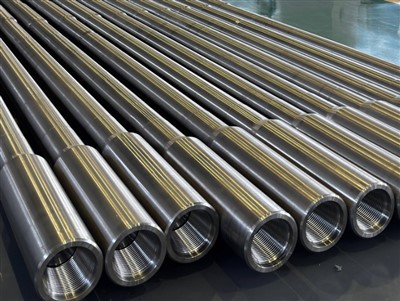
If you’re ready to explore whether non-magnetic drill collars can help reduce vibration and improve your drilling operations, we’re here to help. Our team has the engineering expertise and field data to design a custom NMDC solution tailored to your well’s needs. Contact us to discuss your upcoming projects, and let’s work together to cut downtime, extend bit life, and boost your overall drilling efficiency.
Non-Magnetic Tools for Coal References
- International Association of Drilling Contractors (IADC). Vibration Mitigation in Modern Drilling Operations. 2022.
- Mays, D. et al. Non-Magnetic Drill Collars: A Dual-Purpose Solution for Vibration Control and Downhole Telemetry. Journal of Petroleum Drilling Engineering, vol. 18, no. 3, 2023, pp. 45-58.
- Permian Basin Drilling Performance Report, 2021-2022. West Texas Drilling Association.
- Haynesville Shale Vibration Analysis: Horizontal Well Case Studies. Drilling Engineering Journal, 2022.
Shanxi Zhonghe Non-Magnetic Drill Tool Co., Ltd.
Address: No.168 Fenglei Street, Houma City, Linfen City, Shanxi Province, China.
E-mail: lucy@nmdrillcollar.com
WebSite: https://www.zhnmdc.com/
