If you’re a manufacturer that relies on washer formers (let’s be real, you can’t crank out precision washers fast enough without one), you know downtime isn’t just an inconvenience—it’s a money drain. I’m the guy who’s been supplying washer formers to factories across the Midwest for 12 years, and I’ve seen firsthand how skipping basic maintenance turns a $50k machine into a paperweight in 18 months. Most operators I talk to think “maintenance” means “fixing it when it breaks” but it’s way simpler than that. Let’s break down exactly what you need to do to keep your former running smooth, no fancy tech degree required. Washer Former
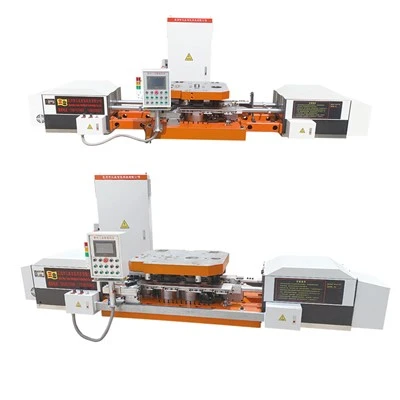
First, let’s get one thing straight: washer formers have two main parts that break first: the feed system and the forming die set. Ignore either, and you’ll be stopping every hour to clear jams or replace a bent tool. I start every customer off with a 10-minute pre-shift check list—you’d be shocked how many skip this. Here’s what that looks like: Grab a rag (no lint, trust me) and a small can of compressed air. Wipe down the coil feed guides (the thing that pulls your raw washer stock into the machine) and blow out any metal shavings that got stuck. Those shavings? They grind into the guide surfaces over time, making your stock feed crooked, which means your washers are off-spec, and you’re scrapping parts. I had a customer last year who was scrapping 12% of his output until we pointed out he never cleaned the feed guides—cut that scrap rate to 1.5% in a week.
Next up, the forming rollers and die bushings. These take the brunt of the pressure—they’re pushing flat metal into the curved washer shape, so every run puts constant stress on them. You can’t just lubricate these once a month; I tell my customers to lube them every 8 hours of run time. Don’t use just any oil, either—skip the generic 3-in-1 stuff. Grab a high-pressure synthetic grease labeled for industrial metal forming equipment. Why? Regular oil breaks down under the heat those rollers generate, leading to premature wear. A lot of folks I work with over-lube, too—you don’t want grease dripping onto your finished washers (that’s a quality control nightmare). Just a tiny dab on each roller axle and the bushing where the die sits is enough. If you notice any squeaking or inconsistent forming, pop the die set off and check for play—if there’s more than 0.002 inches of wiggle, it’s time to shim the die, not wait for it to snap.
Now, the part people dread most: the electrical and pneumatic systems. This is where most hidden issues hide. I’ve had so many operators call me at 2 a.m. because their machine “stopped working for no reason,” and 9 times out of 10, it’s a dirty air filter or a loose wire on the limit switch. Pneumatic lines are under constant pressure, so even a tiny leak can throw off the feed timing. Every 2 weeks, pull out your air filter for the feed system and blow it out, then replace it every 6 months. For electrical connections, turn the machine off, lock it out (safety first, always), and check all the terminals on the motor, limit switches, and control panel. Tighten any loose ones with a small wrench—vibration from the machine makes wires wiggle loose over time. I had one customer who lost $12k in 3 days because a loose wire on the feed motor fried it; we fixed the wire for $15 and saved him from a $7k part replacement.
Wait, let’s not forget the smaller stuff that adds up: the shearing blades. These cut your raw stock to length before forming. Dull blades don’t just make ragged cuts—they pull the stock, which bends your feed, which messes up the whole forming process. I tell customers to check blade sharpness every 10k washers. How? Hold a straight edge against the cut edge of a washer—if there’s a jagged line, it’s time to sharpen. You can do this yourself with a small sharpening stone, or send the blades back to me (we offer a $25 blade sharpening service for my regulars) instead of buying new ones every time. A lot of folks don’t realize that a pair of blades can last 5 years if you sharpen them regularly, not 6 months if you just run them until they break.
Now, here’s a secret only veteran suppliers pass along: schedule quarterly preventive maintenance checks, not just when the machine acts up. For new customers, I include a free first-quarter check with every washer former I sell—we come out, take it apart, inspect every component, replace any worn parts, and adjust the timing so it runs at peak efficiency. Last quarter, we did a check for a metal stamping shop in Ohio that was running 2 shifts a day. We found a worn gear in the drive system that was causing the machine to slow down by 15%; replacing that gear cost them $400, but they made back that money in 2 days from the extra output. Guys, reactive maintenance is expensive—proactive maintenance is just smart.
I also get a lot of questions about running the machine at max speed all the time. Yeah, your machine can crank out 80 washers a minute, but if you’re running it at that speed 24/7, you’re going to wear parts out twice as fast. I recommend running at 70-75% of max speed during regular production to extend the life of your forming dies and feed system. That extra 25% not only reduces wear but also lowers your scrap rate—faster speeds mean less time to adjust, so more off-spec washers. I’ve seen customers who dropped their machine’s speed by 10% and saw their overall output go up because they had fewer jams and less downtime. That’s a win no one sees coming until you test it.
Another big mistake I see: storing the machine wrong when it’s not in use. If you’re switching production to a different part for a few weeks, don’t just turn it off and leave it dirty. Clean the entire machine first—use a degreaser on the bed, blow out all the shavings, wipe down the dies, and apply a light coat of anti-rust oil to all metal parts. Cover it with a breathable plastic tarp (not a garbage bag, that traps moisture) and store it in a dry, climate-controlled space. I had a customer who stored a former in a damp warehouse for 2 months and came back to rust on the die set that cost him $1,200 to replace. A 30-minute cleaning before storage would have saved him that money.
Now, what if you do notice a problem before it becomes a breakdown? Don’t wait to call someone. I tell all my customers to keep a spare set of key parts: the feed guides, a pair of forming die inserts, and an air filter on hand. That way, if a guide wears out, you can swap it in 10 minutes instead of waiting 3 days for a part to ship. Spare parts are cheap compared to downtime— a $100 feed guide is nothing compared to losing a shift of production because you’re waiting on a replacement.
Let’s wrap this up, because I know you’re busy. Maintaining a washer former isn’t rocket science—it’s consistent, small steps every shift, every week, every quarter. Clean the feed guides, lube the rollers, check the air filters, schedule quarterly checks, don’t run max speed 24/7, and keep spares on hand. Skip the “wait for it to break” mindset, and you’ll get 10+ years of life out of your washer former, not 5.

If you’re in the market for a new washer former, or need a reliable supplier for replacement parts or maintenance support, don’t hesitate to reach out. We can help you pick the right machine for your production needs, and even set up a maintenance schedule tailored to your factory’s shift schedule. Let’s make sure your washer former runs for years, not months.
Bearing Ring Former References:
- Industrial Metal Forming Equipment Maintenance Guidelines, National Tooling and Machining Association, 2022
- “Reducing Downtime in Precision Stamping Operations”, Journal of Manufacturing Engineering, Vol. 18, No. 3, 2021
- Lubrication Practices for Industrial Forming Machinery, Machinery Lubrication Magazine, 2020
Quanzhou Sanye Intelligent Technology Co., Ltd.
As one of the most professional washer former manufacturers and suppliers in China, we have world-leading production equipment and strong manufacturing capabilities. Please rest assured to buy customized washer former made in China here from our factory. Welcome to contact us for quotation.
Address: Anhai Town, Jinjiang City, Fujian Province, China
E-mail: jack_tmm@163.com
WebSite: https://www.qzsymanipulator.com/
